The Compound Nobody Finished Reading
The library study room smelled like old carpet and the radiator was too loud, so Maya had her hood up and Soren had his notebook open flat.
"Ask it for something weirder," Maya said. "Everything it gives us is boring."
Soren typed into the scanner. It was a free tool the library had gotten that spring, a program that could read millions of science papers faster than any person and pull out patterns. Their report was supposed to be about materials that conduct electricity. Superconductors, mostly. Things that carried current with no resistance at all, no heat, no waste, if you got them cold enough.
"I asked it to find candidate compounds nobody's finished testing," Soren said.
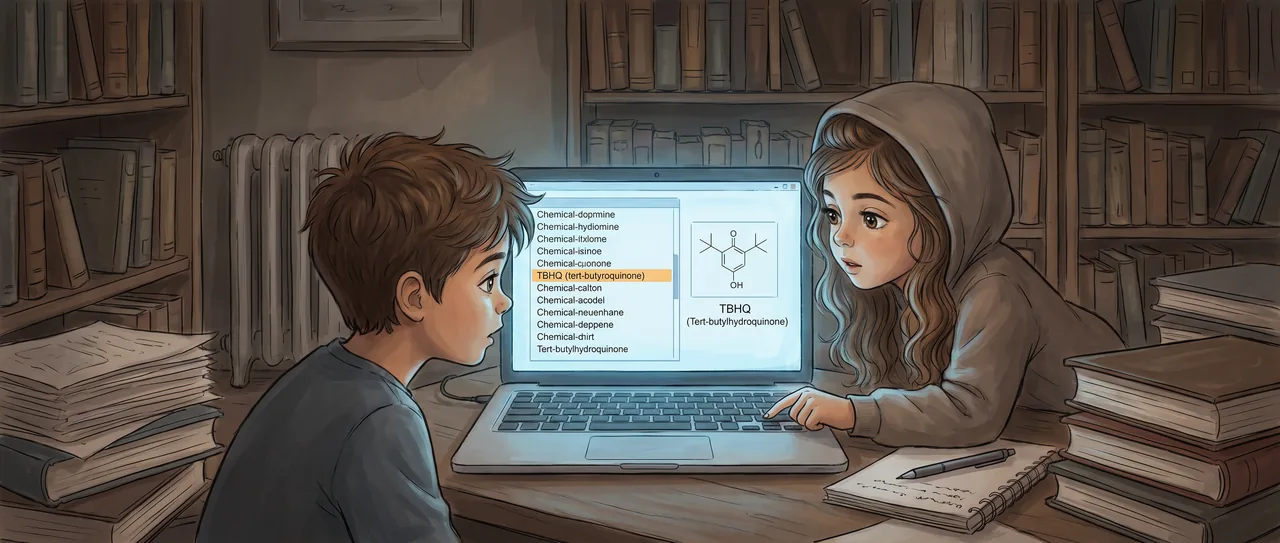
A list came up. Then one line at the bottom went a slightly different color, because the program flagged things it found strange.
Maya leaned in. "What's that one?"
Soren read it out. "It's a preservative. Something people put in food in the nineteen nineties so bread wouldn't go moldy. But the program tagged it under superconductor candidates too."
"A food thing."
"A food thing."
Maya pulled the laptop toward herself. "Why would it put a bread chemical in with the electricity stuff?"
"Because of the shape," Soren said. He turned the screen so they could both see the little molecular diagram. "Look. The program isn't reading what the compound was for. It's reading how the atoms sit. The spacing. It says the arrangement matches the profile of things that might carry current with no resistance."
"Might."
"Might. The people who made it were trying to keep sandwiches fresh. They measured all the food things. They never measured whether it conducts."
Maya sat very still. Then she said, "So nobody ever tested it."
"The program checked. There's the original paper from nineteen ninety-four. There's a patent. There's a bunch of papers about how safe it is to eat." Soren scrolled. "That's it. Twenty-nine years. No one ever ran electricity through it and looked."
"That can't be right."
"Why not?"
"Because," Maya started, and then stopped, because she didn't have a because. She tried again. "Because if the shape was right, somebody smart would have noticed."
"Somebody smart would have to be reading the food papers and the electricity papers at the same time," Soren said. "Those are different rooms. Different people. Different journals. The bread chemists went to bread meetings."
Maya laughed, but it came out thin. "That's such a dumb reason for something to stay hidden."
"It's not hidden." Soren wrote a line in his notebook, the pen scratching under the radiator noise. "It's printed. It's been printed the whole time. It's just that nobody put the two pages next to each other."
Maya was quiet. She was looking at the diagram, at the little grid of atoms someone had drawn thirty years ago to explain why mold wouldn't grow.
"Soren."
"Yeah."
"How many are there?"
"How many what?"
"Pages nobody put next to each other." She turned to him. "There's got to be more than one. If a bread chemical can secretly be an electricity thing, then everything anybody ever made for one reason could secretly be good at some other reason, and we just never checked, because the person who made it wasn't looking for that."
Soren stopped writing.
"There's, like, all of it," Maya said. "Every paint. Every glue. Every medicine that didn't work for the thing they wanted. Somebody measured it for one job and wrote down the answer and moved on. And the answer to a totally different question was sitting right there in the same paragraph."
"The whole library," Soren said slowly.
"The whole library is full of answers to questions nobody asked yet."
The radiator clanked. Neither of them said anything for a second.
Soren looked at the screen again. "The program isn't smart the way people think it is. It doesn't understand bread. It doesn't understand electricity. It just noticed the shape shows up in two places, and the shape doesn't care what room it's filed in."
"That's why it found it and the people didn't," Maya said. "The people were being careful. They stayed in their room. The program wandered into all of them at once."
Soren wrote that down too. Then he set the pen down. "We don't actually know it's a superconductor. Might isn't is. Somebody has to test it. Cool it down, run the current, measure."
"So somebody should."
"We can't. We're eleven. We don't have the machine."
Maya was already looking at the paper's front page, at the small gray line of text under the title. "There's an email. The person who made it. Look, the university's still there."
"They might be retired."
"They might not." Maya pulled the laptop back. "We're not saying we found something. We're saying nobody looked. That's a different sentence. That's an easy sentence. Somebody who spent their whole life on this thing would want to know that nobody ever looked at the one part they didn't measure."
Soren watched her open a new message. "What are you going to say?"
"I'm going to say we're doing a report. And we found their compound in the superconductor list. And ask if anyone ever ran electricity through it." She stopped. "And if they say no, I'm going to ask why not."
"They might say it's a silly question."
"Then it's a silly question that's been true for twenty-nine years and nobody said it out loud." Maya was typing. "You always tell me might isn't is. Fine. But nobody-checked is also a fact. That one we actually know."
Soren leaned back and looked up at the study room ceiling, at the water stain shaped like nothing, and thought about how many papers were in the building around them, on the shelves, in the machines, in all the branches of all the libraries, each one holding a measurement somebody took for one reason.
"Read it to me before you send it," he said.
Maya read it out. It was four sentences. It was a report question and then it was a real question underneath, the kind you can't unask.
Soren nodded once. "Send it."
Maya's finger came down on the key, and the message was gone, out of the loud warm room and into the university where the person who made the bread chemical might, right now, be about to open their email.
Read the interactive version, listen to the narration, and earn a gold star →
A science-verified short story for curious kids · Curiosity Land