The Second Recipe
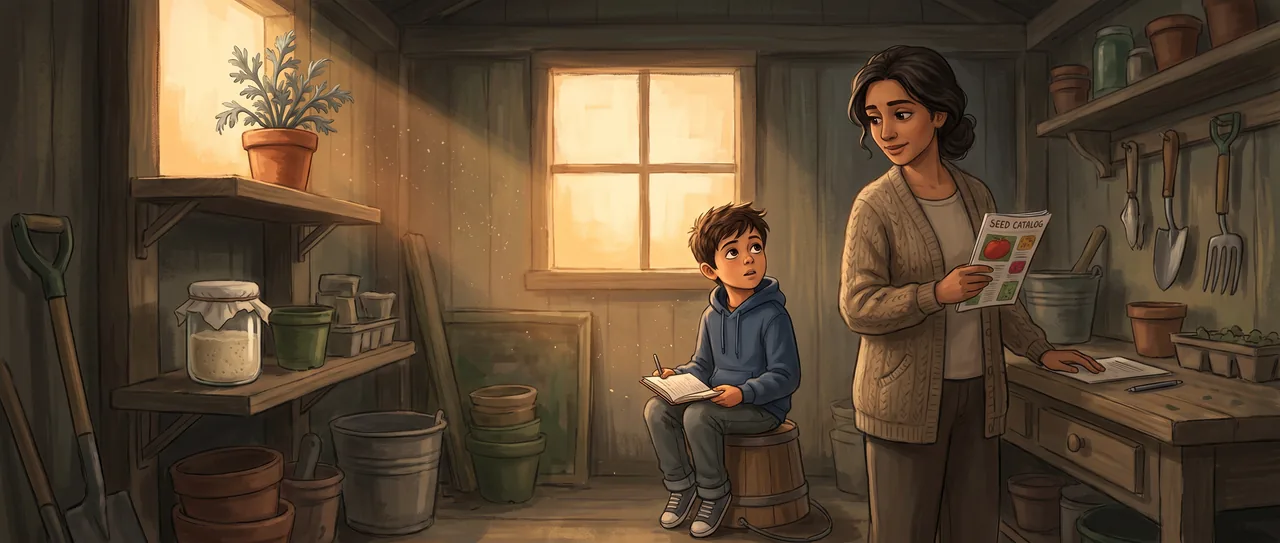
Aunt Priya kept the wormwood plant on the highest shelf, in the one square of light that came through the shed window at four o'clock.
"It's dying," Soren said.
"It's sulking," she said, not turning around. She was elbow-deep in a seed catalog, circling things. "It grows on a mountain in China and I keep it in a shed in this weather. Wouldn't you sulk?"
Soren looked at the plant. Thin, feathery leaves, gone gray at the tips. On the shelf below it sat a jam jar with a rubber band and a cloth over the top, bubbling faintly.
"What's the jar?"
"Yeast. For bread. I feed it flour and it burps." She circled another seed. "Don't touch either of them."
He touched neither of them. He read the little handwritten tag hanging off the plant's pot instead. Artemisia annua, it said, and underneath, in his aunt's cramped print, medicine.
"What medicine?"
"Malaria. Fever you get from mosquitoes. Kills a lot of people, mostly kids, mostly far from here." She finally looked up. "That plant makes the best drug we have for it. A chemical called artemisinin. People used the plant for two thousand years before anyone knew what the plant was actually doing."
Soren opened his notebook and wrote the plant's name. His pencil hovered.
"So we grow the plant and get the medicine out."
"That's the trouble. The plant is stingy. Makes barely any. And it only grows well in a few places, and the harvest goes up and down, and the price with it. One bad year and a clinic can't afford it." She said this the way people say things they have carried a long time. "Whole hospitals waiting on a shrub that sulks."
Soren looked at the plant. Then at the jar of yeast burping under its cloth.
He did not have a thought yet. He had the feeling that comes right before one, like the pressure change before rain.
"How does the plant make it?" he asked. "The medicine."
"Instructions," Priya said. "Genes. Little written recipes inside every cell. The plant's cells read the recipe and build the chemical, step by step."
"So the recipe is a set of words."
"More or less."
Soren wrote: recipe = words. He underlined words twice.
Then he stopped.
"If it's just words," he said slowly, "could you read them to something else?"
Priya put down her pen.
"Say that again."
"The recipe." He was working it out as he spoke, one step, then the next, not letting himself skip. "You said it's genes. Written instructions. And you said the yeast reads instructions too, that's how it burps, it reads its own recipe and turns flour into bubbles. So both of them are just cells reading words and building things." He pointed at the plant, then the jar. "They're the same kind of machine. They just have different recipes loaded in."
"Go on," she said. Her voice had changed.
"So you wouldn't have to grow the sulking plant." He said it carefully, because it seemed too large to say quickly. "You'd just have to take the plant's recipe. The words for the medicine. And put them into the yeast. And then the yeast would read them."
The shed was quiet except for the jar.
"And the yeast doesn't sulk," Soren said. "You feed it sugar and it grows. In a tank. Anywhere. As much as you want."
Priya was looking at him the way you look at someone who has just picked up a thing you thought was too heavy for them.
"Soren," she said. "Sit down."
He sat down on an upturned bucket.
"Someone already did it," she said.
He felt the floor of his stomach drop and lift at the same time.
"They did?"
"Years ago. A whole team of scientists. They took the genes for making artemisinin, or close to it, and they moved them into yeast. Ordinary yeast, cousin of the stuff in that jar. And the yeast read the words and started building the medicine." She reached up and touched one gray leaf of the plant, gently. "Great steel tanks of it. Bubbling. Making a mountain plant's medicine out of sugar. No mountain required."
"So I'm right," Soren said. Not proud. Just checking the mechanism held.
"You're right," she said. "You just walked the exact road they walked. In about four minutes. On a bucket."
Soren looked at the jar again. He had thought of it as burping. Stupid bread yeast. But it was a machine that read words, and if you changed the words, you changed what it built, and the words could come from anywhere. From a plant. From a fish. From a person. Anything alive was running a recipe, and the recipes could be copied out and handed around like a note passed under a desk.
"So the yeast could make other things," he said. "Not just the malaria one. Anything that anything makes. If you had the words."
"That," said Priya, "is the part that keeps the scientists up at night. In a good way."
Soren stared at the little cloth-covered jar. It bubbled, patiently, reading the only recipe it had, with no idea there were others.
"It doesn't know," he said.
"Know what?"
"What it could be told to make. It just makes bubbles because that's the note it's holding." He leaned closer. "You could hand it a different note."
"You could," Priya said. "People do. Insulin. Medicines. Vanilla. Things you'd never guess. All of it, cells reading a note somebody handed them."
Soren picked up his pencil. Under recipe = words, he wrote one more line, pressing hard: the note can come from anywhere.
He looked up at the sulking plant in its four o'clock square of light. Two thousand years it had been the only one who knew this particular recipe. Now the recipe was loose in the world, being read in steel tanks, in bread jars, wherever someone bothered to hand it over.
"Feed the jar," Priya said, and pushed the flour tin toward him. "It's hungry."
Soren lifted the cloth. He spooned flour into the jar and watched the surface stir, the bubbles climbing faster, the little machine bending over its work, building the only thing it knew how to build, waiting, though it could not know it was waiting, for a different set of words.
Read the interactive version, listen to the narration, and earn a gold star →
A science-verified short story for curious kids · Curiosity Land